- June 25, 2026
How Large Should Your Logo Be on a T-Shirt?
Have you ever received custom shirts only to discover the logo looked much smaller or larger than expected? Even a professionally designed logo can lose its impact when the sizing isn’t appropriate for the garment. Choosing the correct logo size on t-shirts is one of the most important decisions in custom apparel design because it directly affects visibility, readability, and overall brand presentation.
Whether you’re creating business uniforms, promotional merchandise, event apparel, or team shirts, understanding shirt logo dimensions and following a reliable logo placement guide can help ensure professional results. The right branding size apparel strategy keeps your logo balanced, easy to recognize, and visually appealing across different garment styles and sizes.
At Custom Tees Now, we help customers determine the ideal logo size for a wide range of apparel projects. This guide explains standard sizing recommendations, placement strategies, production considerations, and practical tips that help create custom apparel that looks polished and performs well in real-world settings.
The Importance of Proper Logo Scaling in Custom Apparel
Logo size influences how viewers perceive your brand at first glance. Too small, and the details become lost even up close. Too large, and the design distorts across body contours or feels overwhelming. Balanced proportions create harmony between the artwork and the fabric, improving comfort and visual appeal.
Beyond aesthetics, correct sizing affects production quality. Screen printing performs best within certain dimensional ranges that allow even ink coverage and proper curing. Oversized prints on curved areas like the chest may crack or fade faster, while undersized ones fail to communicate effectively during networking events or team activities.
Standard Logo Sizes by Placement
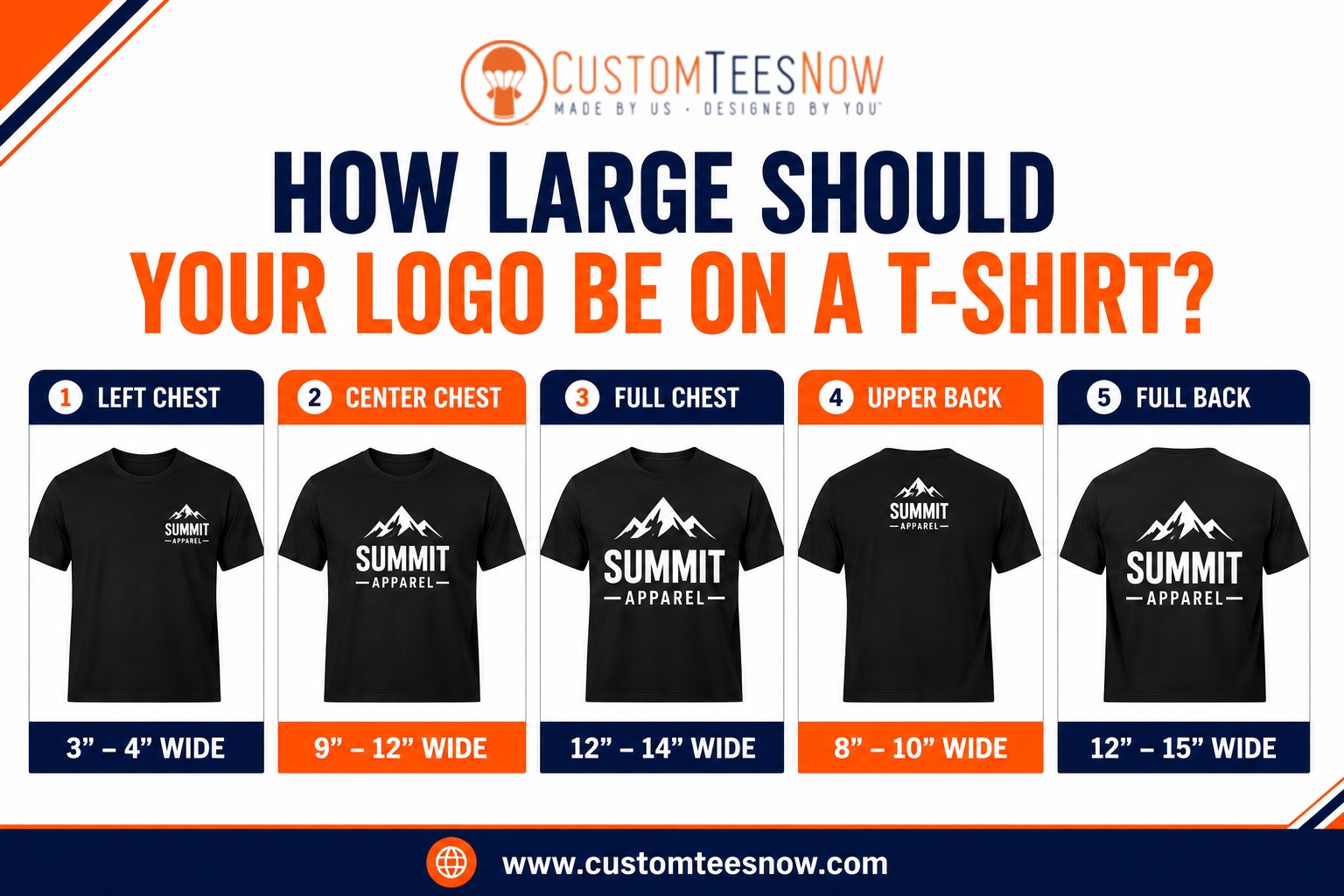
Different locations on a t-shirt call for specific dimensions to maintain balance and readability. The left chest position, a popular choice for professional and corporate looks, typically works best between 3 and 4.5 inches wide. This keeps the logo visible without dominating the overall appearance.
Center chest prints allow more room for creativity, with common widths ranging from 6 to 10 inches for adults. This placement suits bolder designs or those meant to make a stronger statement. Full back prints offer the largest canvas, often measuring 10 to 14 inches wide, ideal for intricate graphics or team names that need space to breathe.
Sleeve logos require restraint due to the smaller, curved surface. Widths between 2 and 3.5 inches prevent wrapping awkwardly around the arm. Youth and smaller sizes need proportionally reduced dimensions to maintain appropriate scale across all garments in an order.
Factors That Influence Ideal Logo Dimensions
Several variables affect the best size for any given project. Garment style plays a major role—fitted cuts versus relaxed ones change how designs sit on the body. Fabric weight and stretch also matter, as heavier materials hold larger prints more stably than lightweight performance blends.
Audience and usage context matter equally. Corporate uniforms favor smaller, discreet sizes, while event merchandise or band apparel often benefits from larger, more prominent displays. Design complexity influences scale too. Simple text or icons can work at smaller sizes, whereas detailed illustrations require more space to remain clear.
Body types within your group should factor into decisions. Ordering samples in multiple sizes helps verify that the chosen dimensions look balanced across various wearers.
Left Chest and Pocket Logo Recommendations
The left chest area serves as a classic spot for professional branding. Aim for dimensions around 3 to 4 inches wide by 2.5 to 4 inches tall for most adult shirts. Position the design approximately 3 to 4 inches down from the shoulder seam and centered between the collar and armpit for natural alignment.
This size range keeps the logo legible while maintaining a polished, understated appearance suitable for business casual or team uniforms. For pocket-style prints, slightly smaller dimensions often work better to mimic traditional pocket proportions.
Center Chest and Full Front Sizing Guidelines
Center chest placements offer flexibility for more expressive designs. Standard adult sizes range from 8 to 10 inches wide, placed about 3 inches below the collar. This positioning creates balanced visual weight without crowding the neckline.
Full front prints can extend larger, especially for artistic or promotional pieces, but staying under 12 to 14 inches wide prevents the design from wrapping excessively around the sides. Always consider how the print will appear when the wearer moves or sits.
Back and Sleeve Placement Strategies
Full back logos provide excellent real estate for detailed artwork or group information. Widths between 10 and 14 inches work well for adults, centered vertically between the collar and hem. This generous space allows for multi-line text or complex illustrations without feeling cramped.
Sleeve prints add subtle branding and typically measure 2 to 3.5 inches wide. Place them on the upper arm, starting a couple inches below the shoulder seam. These smaller accents work particularly well when paired with a left chest logo for coordinated looks.
logo placement guide considerations help ensure your chosen dimensions complement the garment’s natural lines and movement.
Sizing for Different Garment Types and Audiences
Hoodies and sweatshirts accommodate slightly larger prints due to their looser fit and heavier fabric. Pocket prints on polos or button-downs require more conservative sizing to maintain a clean, tailored appearance. Youth apparel demands scaled-down versions—often 70-80% of adult sizes—to look proportionate on smaller frames.
Consider gender and body diversity within your group. Women’s cuts often have different proportions, so testing across styles prevents disappointment. Athletic wear may need adjustments for stretch and movement, favoring designs that don’t restrict or distort during activity.
| Left Chest | 3–4.5 inches | 2.5–4 inches | 2–3.5 inches | Corporate, teams, daily wear |
| Center Chest | 6–10 inches | 6–8 inches | 5–8 inches | Main branding, events |
| Full Back | 10–14 inches | 8–12 inches | 8–11 inches | Team names, large graphics |
| Sleeve | 2–3.5 inches | 2–3 inches | 1.5–2.5 inches | Accent branding, subtle details |
This table summarizes practical starting points while highlighting the need for project-specific adjustments.
Technical Considerations for Screen Printing
Screen printing imposes certain limitations based on mesh counts and ink flow. Very small details in oversized logos may fill in, while extremely large prints require careful registration to avoid misalignment across multiple colors.
Maintaining adequate margins around the design prevents edge issues during printing and ensures the final product looks intentional rather than crowded.
Common Mistakes to Avoid with Logo Sizing
Many projects suffer from scaling logos directly from business cards or websites without adjustment. Digital files often need significant enlargement or reduction to suit fabric applications. Another frequent error involves ignoring how fabric drapes and stretches, leading to distorted appearances on actual bodies.
Failing to order samples represents a costly oversight. What looks perfect on screen may feel unbalanced once worn. Overlooking consistency across an entire order—different sizes and styles—creates uneven branding that appears unprofessional.
Best Practices for Determining Your Perfect Size
Start by defining the primary purpose of the logo on the shirt. Collect reference images of similar successful projects for inspiration. Use design software to mock up various sizes on virtual garments, then request physical proofs from your printer.
Consider creating multiple size variations within the same order if your group has diverse needs. Document your final decisions for future reorders to maintain brand consistency over time.
Working with Your Printer for Optimal Outcomes
Professional printers evaluate your artwork and suggest refinements based on their equipment and experience. They can recommend adjustments that improve both appearance and longevity while controlling costs.
At Custom Tees Now, our team reviews logo sizing as part of the art approval process, helping customers achieve balanced, production-ready designs tailored to their specific garments and goals.
Final Thoughts on Creating Effective Logo Apparel
Determining the right logo size on t-shirts blends artistic vision with practical production knowledge. By considering placement, audience, garment type, and technical requirements, you create custom pieces that communicate clearly and look professional in any setting.
Thoughtful sizing decisions transform ordinary shirts into powerful branding tools that recipients actually enjoy wearing. The effort invested upfront yields garments that strengthen identity and leave lasting positive impressions.
Ready to get your logo sizes right and produce exceptional custom t-shirts? Custom Tees Now offers expert guidance, quality screen printing, and personalized support to bring your vision to life perfectly. Contact our team or explore our design tools today to start your next successful apparel project.