- January 1, 2026
How to Choose the Best T-Shirt Weight for Your Design
When creating custom t-shirts, the fabric weight plays a pivotal role in determining the final product’s comfort, durability, appearance, and overall success. Many people focus on design elements like colors, graphics, and fonts, but overlooking t-shirt weight for printing can lead to disappointing results—prints that crack, fabrics that feel cheap, or garments unsuited to the intended use. Understanding shirt fabric weight helps ensure your custom pieces meet expectations, whether for events, branding, team uniforms, or personal wear.
T-shirt weight is measured in GSM (grams per square meter), a standard that indicates how dense and thick the fabric is. Higher GSM means heavier, thicker material; lower GSM means lighter, more airy fabric. Choosing the right weight affects everything from breathability and drape to how well ink adheres during printing. At Custom Tees Now, we work with a range of fabrics to help clients achieve the perfect balance for their projects.
This guide explores the key aspects of shirt fabric weight, compares lightweight vs heavyweight t-shirts, and offers practical recommendations on the best GSM for t-shirts based on real-world applications. By the end, you will know how to select the ideal fabric weight to elevate your custom designs.
What Is T-Shirt Weight and Why Does It Matter?
T-shirt weight refers to the fabric’s density, expressed in GSM. A square meter of fabric that weighs 150 GSM, for example, feels noticeably different from one that weighs 200 GSM. The measurement accounts for thread count, yarn type, weave tightness, and material composition—typically 100% cotton, cotton blends, or ring-spun cotton for premium softness.
Why prioritize t-shirt weight for printing? The fabric’s density influences several critical factors:
- Print quality: Lighter fabrics may absorb ink unevenly or show through on light-colored bases, while heavier ones provide a stable surface for crisp, vibrant results.
- Comfort and wearability: Weight determines breathability, warmth, and how the shirt feels against the skin.
- Durability: Heavier fabrics resist wear, pilling, and fading better over time.
- Opacity: Thicker material prevents undergarments from showing through, which is essential for professional or promotional apparel.
- Drape and fit: Lighter weights hang loosely for a relaxed look; heavier ones offer structure and a more tailored silhouette.
Ignoring these elements can result in returns or dissatisfied customers. Selecting the appropriate weight aligns the garment with its purpose, climate, and audience expectations.
Common T-Shirt Weight Categories
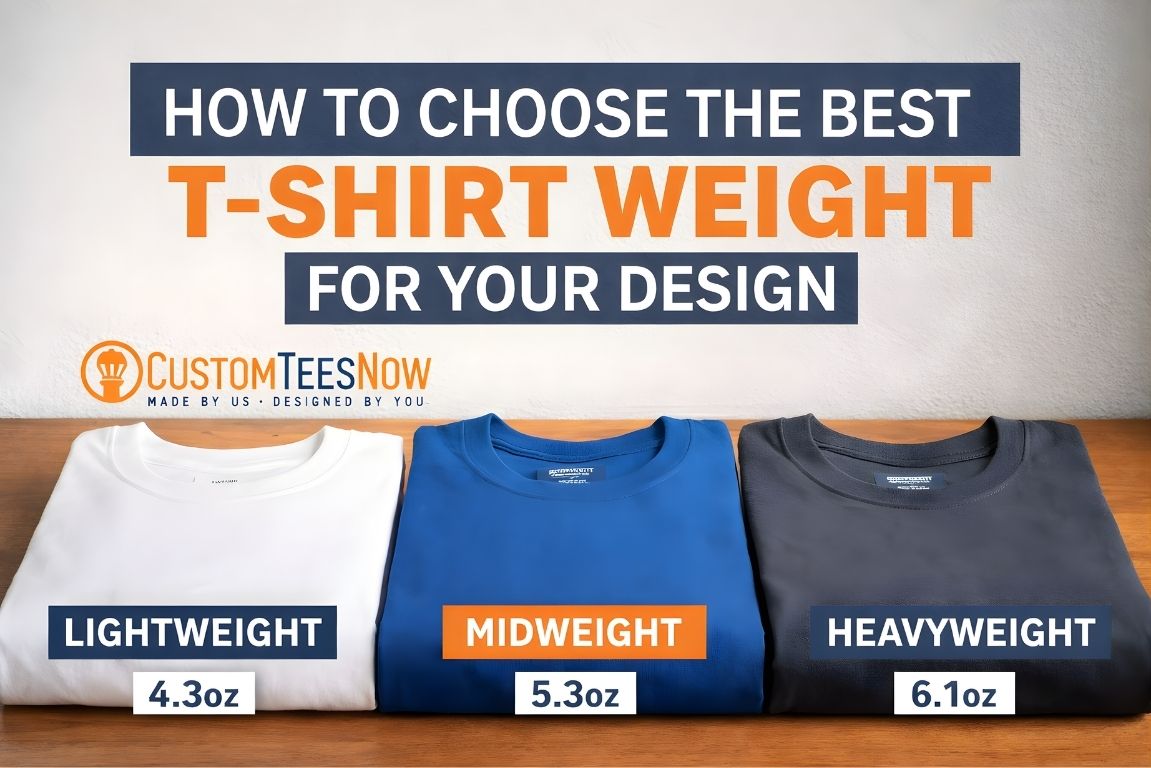
T-shirt fabrics generally fall into three categories: lightweight, midweight, and heavyweight. Each serves distinct needs, especially when custom printing is involved.
Lightweight T-Shirts (120–160 GSM)
These fabrics prioritize airflow and a minimal feel. They often use finer yarns and looser knits, making them soft and smooth to the touch. Ideal for hot climates or high-activity scenarios, lightweight shirts feel almost weightless when worn.
Midweight T-Shirts (160–200 GSM)
The most versatile category, midweight fabrics strike a balance between lightness and substance. They provide enough density for structure without feeling bulky. This range is popular for everyday wear and custom orders because it supports a range of printing techniques.
Heavyweight T-Shirts (200+ GSM)
Thick, dense fabrics that deliver a premium, substantial feel. Often made with compact knits or higher yarn counts, they offer excellent structure and longevity. These shirts suit cooler weather or brands seeking a luxurious perception.
Lightweight vs Heavyweight T-Shirts: A Detailed Comparison
To clarify the differences, consider the following comparison of lightweight vs heavyweight t-shirts. Midweight sits in the middle as a compromise.
| Lightweight | 120–160 | Thin, airy, soft drape | Excellent breathability; light to wear; affordable; great for layering or summer | Less durable; may show through; prints prone to cracking; limited opacity | Hot climates, athletic wear, events, promotions | DTG for detail; screen printing possible but requires care |
| Midweight | 160–200 | Balanced thickness, good structure | Versatile across seasons; durable; comfortable; excellent print surface | Not as cooling as lightweight; not as warm as heavyweight | Everyday use, business branding, teams, all-purpose custom orders | Ideal for screen printing and DTG; consistent results |
| Heavyweight | 200+ | Thick, sturdy, premium feel | Highly durable; opaque; crisp prints; structured fit; luxurious hand | Can feel warm or heavy; higher cost; less breathable in heat | Cooler weather, premium branding, long-term wear, streetwear | Superior for screen printing; holds heavy ink; embroidery-friendly |
This table highlights why many custom projects gravitate toward midweight— it delivers reliable performance without extreme trade-offs.
Best GSM for T-Shirts: Recommendations for Different Needs
The best GSM for t-shirts depends on the project’s goals. Here are tailored suggestions:
- For summer events, outdoor activities, or tropical climates: 135–155 GSM. These lightweight options keep wearers cool and comfortable. They work well for promotional giveaways or casual group shirts where breathability trumps longevity.
- For everyday casual wear or versatile branding: 165–185 GSM. This midweight sweet spot offers opacity, softness, and durability without excess heat. It suits most businesses, teams, and personal orders because it feels premium yet practical.
- For premium branding, cooler seasons, or high-end designs: 200–230 GSM. Heavyweight fabrics convey quality and withstand frequent washing. They excel when you want a structured look or designs that pop with bold ink coverage.
- For printing-heavy projects: 170–200 GSM. This range provides a stable base that prevents ink bleed and ensures wash-fast results. Midweight fabrics accommodate multi-color screen prints without puckering or distortion.
Consider your audience: younger customers may prefer lighter, trendier fits; corporate clients often lean toward midweight for professionalism.
How Printing Method Influences Fabric Weight Choice
Different printing techniques interact uniquely with shirt fabric weight:
- Screen Printing: Thrives on midweight to heavyweight fabrics (170+ GSM). The thicker surface evenly holds ink layers, producing sharp edges and vibrant colors that resist fading. Lighter fabrics can absorb too much ink, leading to dull results or cracking after washes.
- Direct-to-Garment (DTG) Printing: Performs best on midweight ring-spun cotton (160–190 GSM), offering a smooth surface that captures fine details and color gradients, which is especially important for businesses offering Direct to Garment (DTG) Printing where humidity can affect ink behavior.
- Embroidery: Prefers heavier fabrics (180+ GSM) to avoid puckering around stitches. Lightweight material can distort under needle tension, compromising the design’s integrity.
At Custom Tees Now, our screen printing expertise ensures optimal results across weights, with free proofs to confirm appearance before production.
Other Factors to Consider When Selecting T-Shirt Weight
Beyond GSM ranges, evaluate these elements:
- Climate and season: In hot, humid areas, prioritize 150 GSM or below. For variable weather or layering, midweight offers flexibility.
- Design complexity: Bold, full-coverage prints benefit from heavier fabrics to prevent show-through. Intricate or detailed designs suit midweight for clarity.
- Budget: Lightweight options reduce material costs and shipping fees. Heavyweight increases expenses but adds perceived value.
- Intended use: Promotional items favor lightweight for volume orders. Uniforms or merchandise benefit from midweight durability.
- Fabric type: Ring-spun cotton feels softer at any weight. Blends may lighten the overall feel while adding stretch.
Testing samples is invaluable—order blanks to assess hand feel and print performance firsthand.
Tips for a Successful Custom T-Shirt Order
To make the most of your t-shirt weight for printing decision:
- Define the primary use and environment early.
- Request fabric swatches or samples to compare weights.
- Discuss the print method with your provider to match fabric compatibility.
- Factor in care instructions—lighter weights may need gentler washing to maintain shape.
- Balance aesthetics with practicality for long-term satisfaction.
Custom Tees Now offers a variety of weights, instant quotes, and expert guidance to match your vision. Our minimum order of 12 pieces makes it easy to test different options.
Final Thoughts
Choosing the right t-shirt weight for printing transforms a simple garment into a high-quality, purposeful item. Whether you select lightweight for comfort in the heat, midweight for all-around versatility, or heavyweight for lasting impact, the decision shapes comfort, print quality, and customer perception. By understanding GSM, weighing pros and cons, and aligning fabric with your goals, you set the stage for successful custom apparel.
Ready to bring your design to life? At Custom Tees Now, our experienced team helps you select the ideal shirt fabric weight and delivers professional results every time. If you are planning a project that requires professional custom t-shirt printing, our team is here to guide you through fabric selection, print methods, and finishing options. Contact us today for a free design consultation and quote—your perfect custom t-shirts are just a conversation away.